In the world of high-end residential architecture, the goal is always perfection: clean lines, curated art, and a sense of effortless flow. Yet, there is often an unavoidable intruder in this vision—the bulky, utilitarian presence of HVAC systems. Whether it is an obtrusive window AC unit or a series of industrial-looking air vents that break up the serenity of a ceiling, these systems are a persistent aesthetic challenge.
When you invest in a luxury home, you shouldn’t have to sacrifice your design vision for the sake of climate control. Mastering the art of how to hide AC units in interior design is the hallmark of a sophisticated home. By integrating these systems into your overall architectural narrative, you can maintain the cooling you need without compromising the aesthetic you love.
The Aesthetic Challenge of Bulky Cooling Systems
Luxury interior design is built on the foundation of visual rhythm. Every element, from the crown molding to the texture of your floorboards, contributes to that rhythm. Traditional HVAC systems—with their prominent grilles and boxy frames—act as visual “noise.” They draw the eye away from your intentional decor choices and toward the utilitarian skeleton of the building.
The challenge is intensified in open-plan homes, where lines of sight are unobstructed. A single poorly placed vent can disrupt the symmetry of a luxury kitchen or the calming atmosphere of a primary suite. The solution is never to ignore these elements, but to treat them as an architectural design constraint that demands a creative, bespoke answer.
Creative and Luxury Design Solutions for Hiding HVAC
The best way to address HVAC components is to design around them from the start. If you are already living in your space, don’t worry—there are plenty of ways to integrate these systems seamlessly.
Custom Cabinetry and Millwork Enclosures
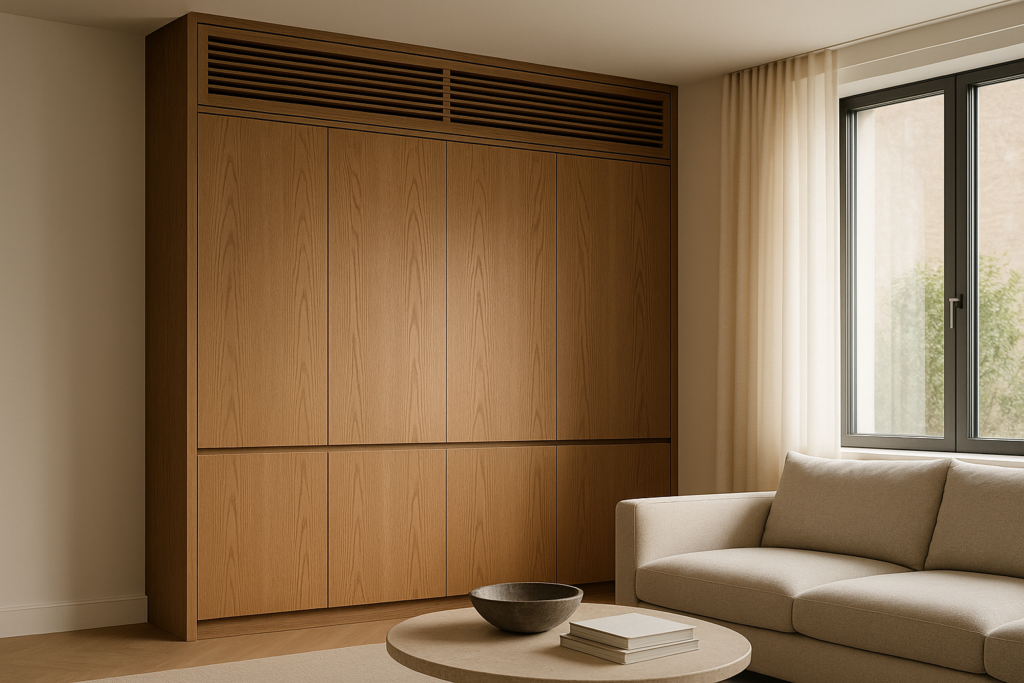
Perhaps the most robust solution is custom millwork AC cover design. By working with a designer to incorporate your cooling units into your existing storage or built-ins, you effectively turn a liability into a functional asset.
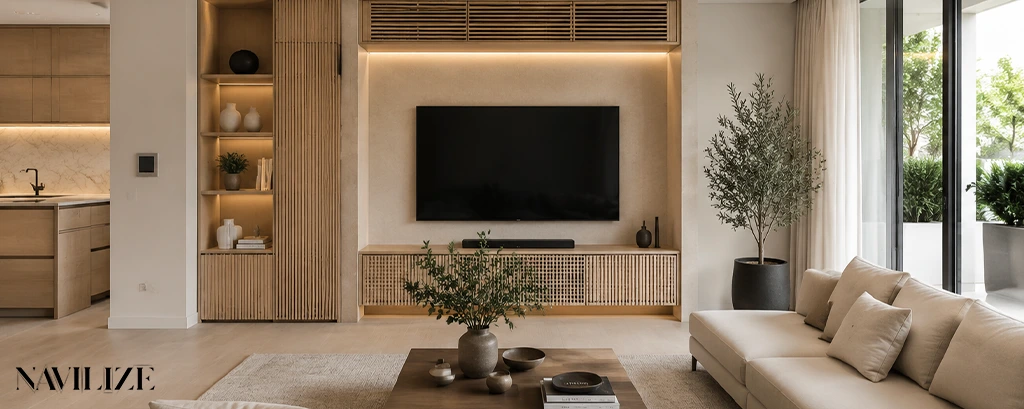
Imagine a floor-to-ceiling bookshelf or a custom media console that integrates ventilation gaps behind decorative wood detailing. This approach hides the unit entirely while adding character to the room. Luxury interior cabinetry can be designed with specialized “breather” panels—either carved or perforated—that match the aesthetic of your millwork, making the AC unit completely invisible to the casual observer.
Slatted Wood Panels and Decorative Architectural Screens
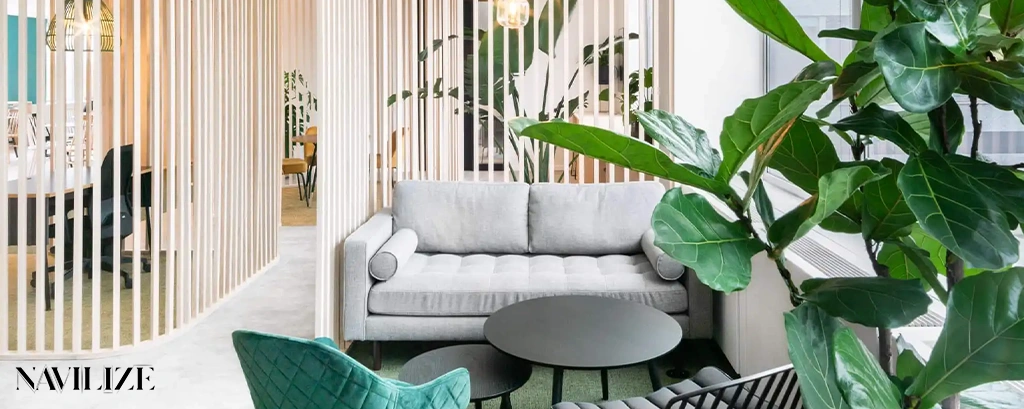
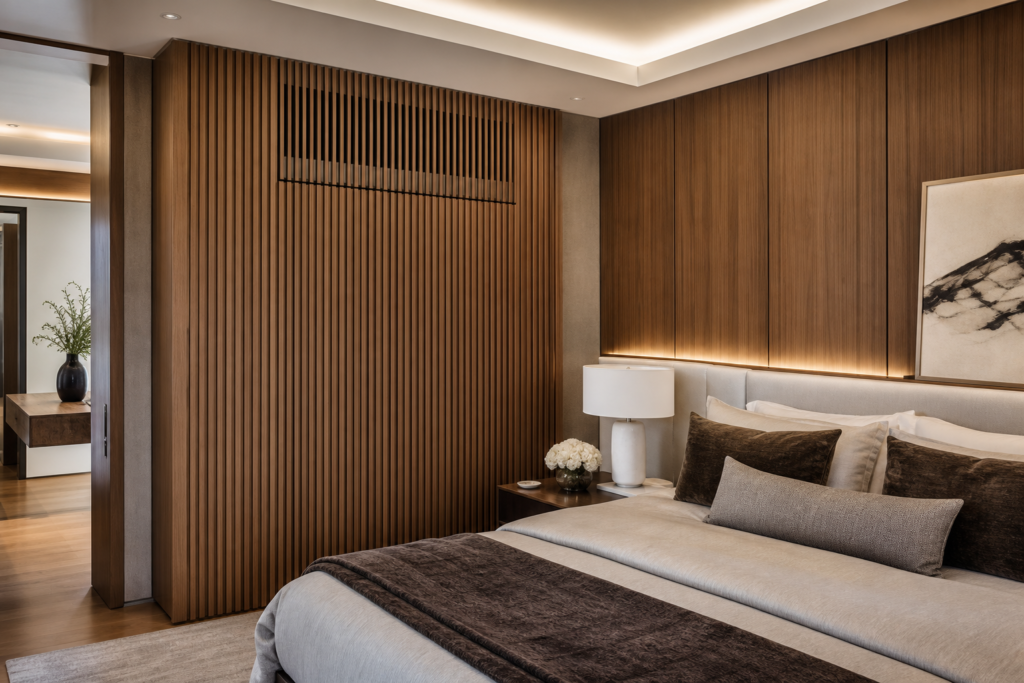
For wall-mounted units or return air vents, slatted wood paneling is a quintessential modern luxury choice. These panels provide a sophisticated, textured wall feature that feels intentional and high-end.
The vertical lines of the slats draw the eye upward, increasing the perceived height of the room, while the spacing between the slats allows for the necessary airflow for your system. This strategy works exceptionally well to camouflage HVAC units that might otherwise be eyesores. You can finish the wood to match your flooring, your window casings, or your custom furniture, creating a cohesive, architectural look that feels like a deliberate design choice.
Strategic Placement and Color Blending Techniques
Sometimes, the simplest approach is the most effective. If your vents are high on the wall or ceiling, color blending is a powerful, low-impact tool. By painting the HVAC grilles the exact same color and sheen as the surrounding wall or ceiling, you minimize their visual weight.
In some cases, strategic furniture placement can also work. A well-placed piece of art, a tall indoor plant, or a bookshelf can create a physical distraction. However, when using this method, ensure that you are not obstructing the path of the air—an important distinction between “hiding” and “suffocating” the system.
How to Maintain Proper Airflow While Concealing Units
While the aesthetic result is the priority, the technical reality of HVAC systems cannot be ignored. The most common mistake homeowners make is to completely seal off a vent or unit to hide it, which can cause the system to overheat, increase energy consumption, and significantly decrease the lifespan of your cooling equipment.
To maintain conceal air vents without impacting performance, always ensure that your custom covers have a “free area” that matches the square footage of the original grille. If you are opting for a custom wood panel or cabinetry, make sure the backing is open and accessible. Furthermore, ensure that any custom enclosure is easily removable for routine cleaning and maintenance. A true luxury design is one that is as functional as it is beautiful.
Seamless HVAC Integration with Navilize Custom Millwork
Achieving a clean, integrated look requires more than just a creative idea; it requires precision engineering and an understanding of interior architecture. At Navilize, we believe that every detail of your home, down to the ventilation, should be executed with the highest level of craftsmanship.
Our team specializes in creating bespoke solutions that solve the logistical challenges of modern living. Through our professional interior design services, we look at your home as a whole, ensuring that your HVAC systems are not just hidden, but actively integrated into the design. We work with master carpenters to create millwork that feels like it was always meant to be part of the architecture, ensuring that your cooling systems disappear into the background.
Don’t let utilitarian systems disrupt the peace of your luxury home. If you are looking to elevate your interior aesthetic through intelligent design, let us help you find the perfect solution. Visit Navilize to start the conversation about how we can refine your home’s architecture, one detail at a time.