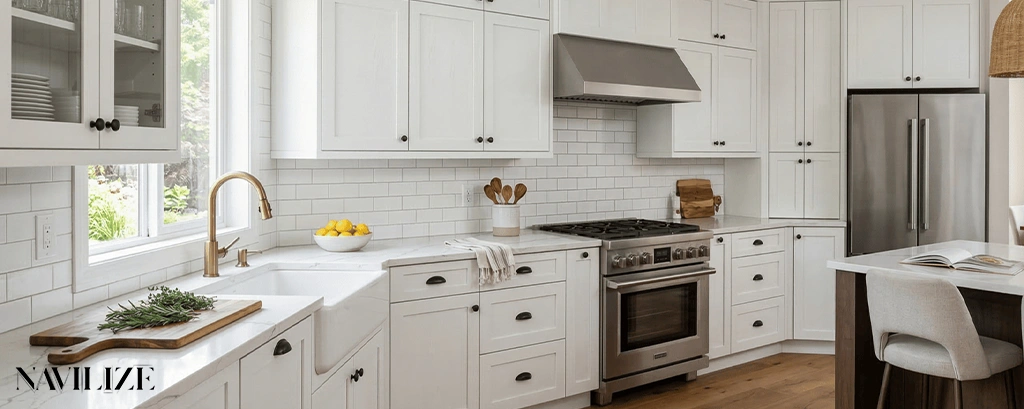
White kitchen cabinets are one of the most requested finishes I see in design projects — and one of the most misunderstood when it comes to care. The good news: keeping them looking sharp doesn’t require expensive products. It requires the right technique and a little consistency.
Why White Cabinets Need Special Care
White surfaces don’t hide anything. A smudge that disappears on a dark cabinet stands out immediately on a bright white finish. But the bigger issue isn’t dirt — it’s the finish itself.
Most white kitchen cabinets are either painted (typically with a water-based or alkyd paint) or finished with a thermofoil or laminate wrap. Each reacts differently to cleaners, moisture, and heat. Use the wrong product once, and you can dull the sheen, lift the paint, or cause irreversible yellowing.
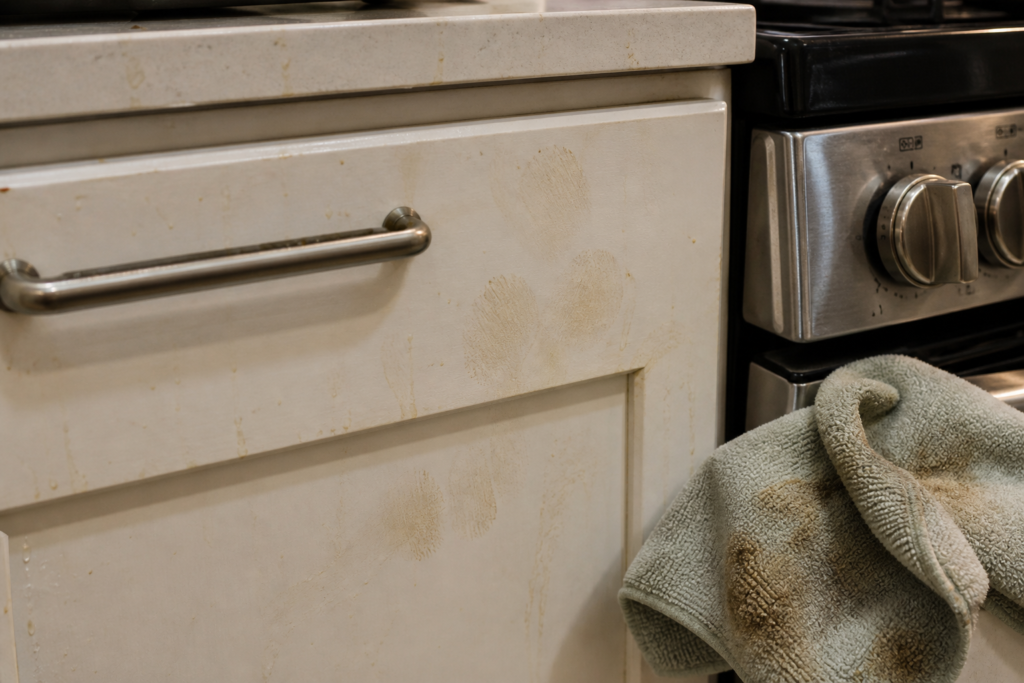
The other factor: kitchens are high-humidity, high-grease environments. Steam from cooking, oil mist from frying, and fingerprints from daily use all accumulate — especially around handles and near the stove. Without regular cleaning, that buildup bonds to the finish and becomes significantly harder to remove.
How to Clean White Cabinets Properly
What you’ll need:
- Warm water
- A few drops of dish soap (Dawn or similar)
- Two microfiber cloths (one damp, one dry)
- A soft-bristle toothbrush for hardware and corners
Step-by-step:
- Mix a small amount of dish soap into warm (not hot) water.
- Dampen your microfiber cloth — it should be moist, not dripping.
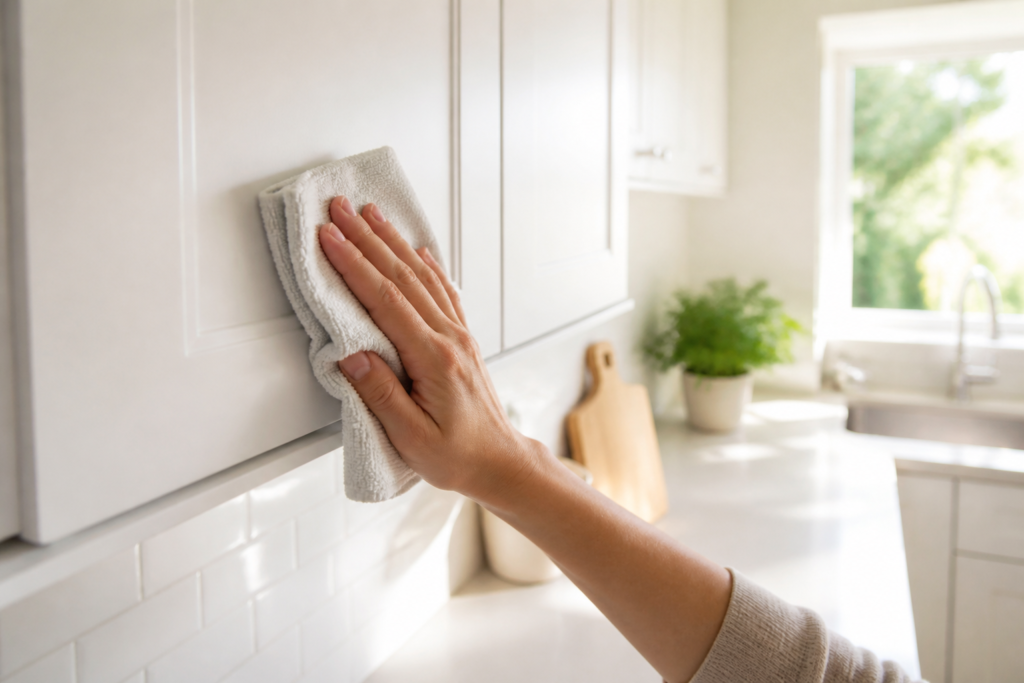
- Wipe in the direction of the wood grain or panel lines, using light pressure.
- For grease buildup near the stove or handles, let the damp cloth sit on the area for 30–60 seconds before wiping. This softens the residue without scrubbing.
- Immediately follow with a dry microfiber cloth. Leaving moisture on painted cabinets — even briefly — can cause swelling or paint adhesion issues over time.
- Use the toothbrush around hinges and inside grooves where grease collects.
For stubborn grease, a 1:1 mix of white vinegar and water works well on most painted finishes. Test it on an inconspicuous spot first — some flat or matte paints are sensitive to acidity.
Frequency: Wipe down high-touch areas (around handles, near the stove) weekly. Do a full cabinet clean monthly.
How to Prevent Yellowing
Yellowing is the most common complaint I hear from homeowners with white cabinets — and it’s almost always preventable.
The main causes:
- UV exposure: Sunlight oxidizes white paint over time, especially oil-based formulas. South- or west-facing kitchens are most vulnerable.
- Cooking grease and smoke: Airborne grease deposits a thin film that yellows with heat.
- Cleaning product residue: Ammonia-based cleaners (like many glass cleaners) leave a residue that yellows under heat and light.
- Age of the paint: Oil-based paints yellow naturally as they cure — this is a chemistry issue, not a maintenance failure.
Prevention strategies:
- Run your range hood on low during all cooking, not just when things are smoking. This captures airborne grease before it settles.
- Apply a UV-filtering window film on kitchen windows that receive direct afternoon sun.
- If you’re repainting, choose a water-based (latex or acrylic) formula with a built-in UV inhibitor — these resist yellowing significantly better than oil-based alternatives.
- Clean cabinets regularly (see above) so grease doesn’t accumulate and bake onto the surface.
One client I worked with had beautiful white Shaker cabinets that had turned noticeably cream within two years. The culprit: an oil-based paint chosen for its durability, combined with a south-facing window and no range hood use. Switching to a water-based repaint and adding a simple hood habit made a visible difference within months.
Cleaning Products to Avoid
This is where most damage happens. Some of the most common household cleaners are the worst choices for white painted cabinets:
| Product | Why to Avoid |
| Bleach or bleach-based sprays | Strips paint sheen, causes discoloration |
| Ammonia-based cleaners (Windex, etc.) | Leaves yellowing residue, dulls finish |
| Abrasive scrubbers (Scotch-Brite, steel wool) | Scratches paint, creates micro-grooves that trap grease |
| Magic Eraser / melamine foam | Removes paint sheen — especially damaging on satin or semi-gloss |
| Oil-based polishes or furniture wax | Builds up on painted surfaces, attracts dust, yellows |
| Undiluted vinegar | Too acidic for some finishes; always dilute 1:1 with water |
The safest rule: if it’s not dish soap and water, test it in a hidden spot first.
Long-Term Maintenance Tips
Consistent small habits extend the life of white cabinets far more than any deep-cleaning session.
Protect the finish:
- Add soft-close hardware if you don’t have it — slamming doors chips paint at the edges over time.
- Use cabinet bumpers (small adhesive pads) on door corners to prevent paint transfer and chipping.
- Line the inside of lower cabinets with shelf liner to prevent moisture from sitting on the cabinet floor.
Touch-up before it becomes a problem:
- Keep a small amount of your cabinet paint (or a close match) for touch-ups. Address chips within a few weeks — exposed wood absorbs grease and moisture quickly, making the repair harder.
- For thermofoil cabinets, use a heat gun on low to re-adhere any lifting edges before they peel further.
Annual check:
- Once a year, inspect hinges and drawer slides. Loose hardware causes misalignment, which leads to paint rubbing and chipping at contact points.
- Check caulk lines around the sink and countertop. Failed caulk lets moisture wick up into the cabinet base — one of the fastest ways to cause irreversible damage to painted finishes.
For a full kitchen refresh or if your cabinets need more than maintenance can fix, Navilize offers interior design services that include cabinet specification and finish selection tailored to your kitchen’s light conditions and usage patterns.
Frequently Asked Questions
How often should I clean white kitchen cabinets?
Wipe high-touch areas (handles, near the stove) weekly with a damp microfiber cloth and dish soap. Do a full clean of all cabinet surfaces monthly.
Why are my white cabinets turning yellow?
The most common causes are UV exposure, cooking grease buildup, and oil-based paint aging. Switching to a water-based paint formula, using your range hood consistently, and cleaning regularly will prevent most yellowing.
Can I use a Magic Eraser on white cabinets?
No. Melamine foam is mildly abrasive and removes paint sheen, especially on satin or semi-gloss finishes. It may look clean initially but dulls the surface permanently.
What’s the best homemade cleaner for white cabinets?
A few drops of dish soap in warm water is the safest and most effective option. For grease, a 1:1 dilution of white vinegar and water works well — always test first and dry immediately after.
How do I fix yellowed white cabinets?
Light yellowing from grease can sometimes be reduced with a diluted vinegar wipe-down. Yellowing from paint oxidation (especially oil-based paint) typically requires repainting with a water-based formula.