I’ve watched clients spend 4,000on a sofa that looked incredible in the showroom and was sagging within two years..I′ve also seen a 1,200 sofa from a small manufacturer still looking perfect after a decade. The difference had nothing to do with price — it had everything to do with what was inside.
This guide covers exactly what to look for, what to ask, and what to walk away from. By the end, you’ll know more about sofa construction than most salespeople do.
What Makes a Sofa Last?
Most people walk into a showroom, sit down, decide it feels comfortable, and buy it. That’s how you end up replacing a sofa in four years.
A sofa that lasts 15 years comes down to three things working together: the frame, the cushions, and the fabric. Each one can fail independently. A beautiful fabric on a weak frame is still a bad sofa. Great cushions on a particleboard skeleton won’t survive a move, let alone a decade of daily use.
The frustrating part is that none of these things are visible. You’re essentially buying blind — unless you know what questions to ask.
How to Choose the Right Frame
The frame is the one thing you genuinely cannot fix later. Cushions can be replaced. Fabric can be reupholstered. A warped or cracked frame means the sofa is done.
Kiln-dried hardwood — oak, ash, or beech — is what you want. “Solid wood” on a tag means nothing without knowing the species and whether it was kiln-dried. Wet wood warps. Softwood splits. I’ve seen sofas described as “solid wood construction” that used pine corner blocks and particleboard panels everywhere else.
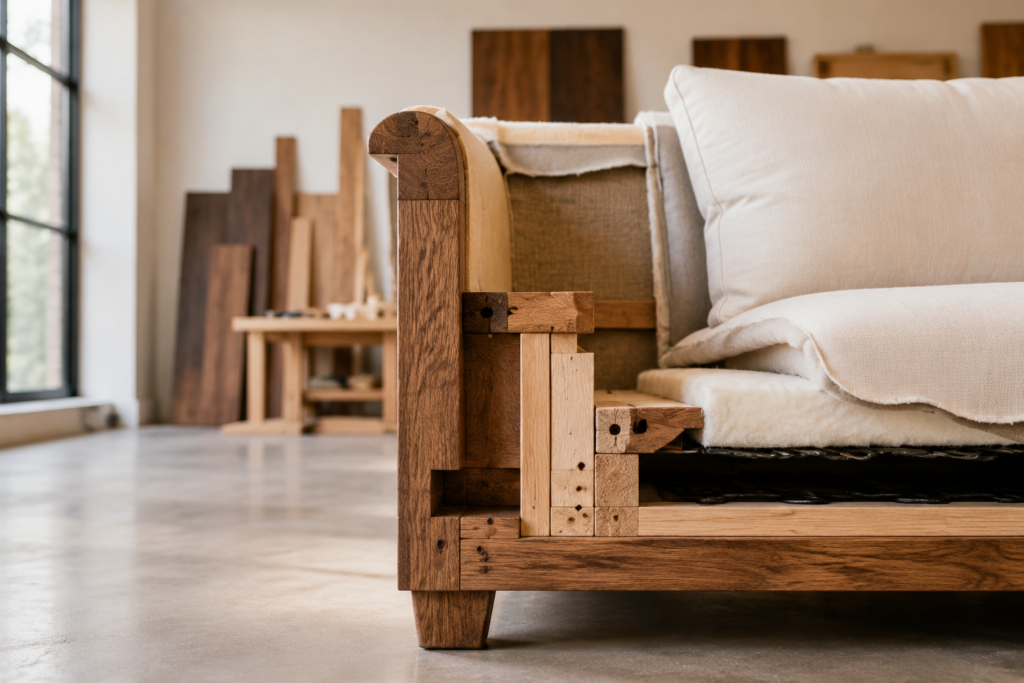
A quick test you can do in the showroom: lift one front corner about six inches off the ground. If the opposite rear leg rises with it, the frame is rigid and well-jointed. If the sofa twists or the other leg stays flat, the joints are weak.
For sofa frame quality, the joints matter as much as the material. The best frames are glued, screwed, and doweled — all three. Any one method alone is a compromise. Two is acceptable. One is a red flag.
| Frame Material | Durability | What to Know |
| Kiln-dried hardwood | Excellent | Best long-term choice |
| High-grade plywood | Good | Acceptable in secondary panels |
| Particleboard / MDF | Poor | Avoid entirely |
| Metal (welded) | Good | Check weld quality at joints |
The Best Cushion Filling
Here’s something most people don’t realize: a cushion that feels incredibly soft in the showroom is often a warning sign, not a selling point. Overly soft foam compresses permanently within 18 months. You’re essentially feeling the future sag.
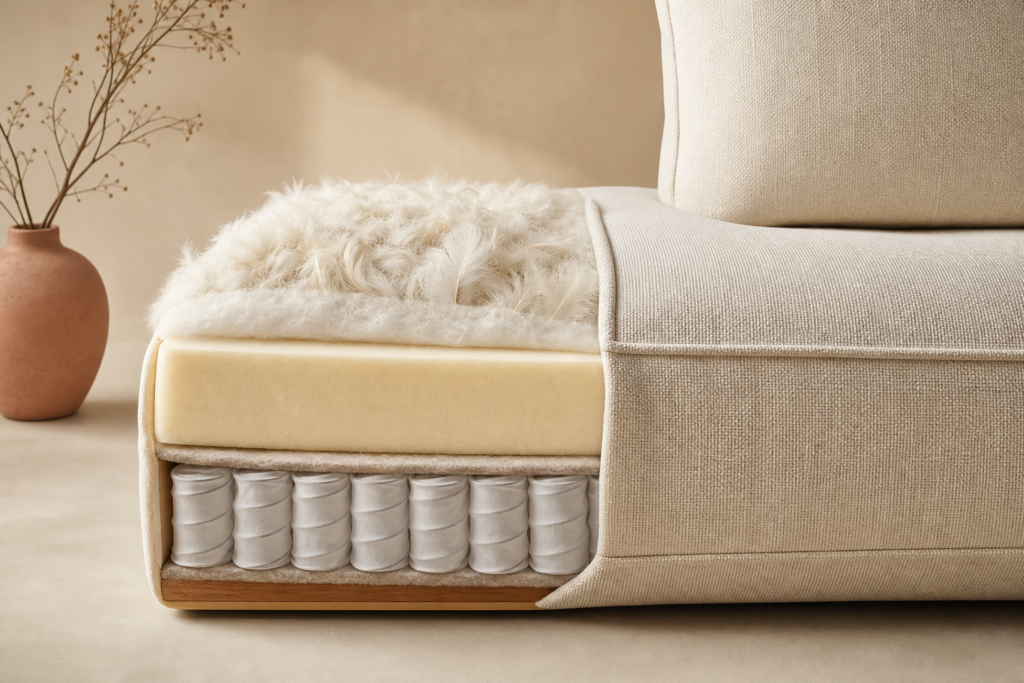
The best sofa material for seat cushions is high-resilience (HR) foam with a density of at least 1.8 lb/ft³ — ideally 2.0 to 2.5. Always ask for the spec sheet. If the retailer doesn’t have one, that tells you something.
A foam core wrapped in a layer of down or feather gives you the best of both worlds: structural support that holds its shape, with a softer surface feel. Pure down cushions look beautiful but require daily fluffing and lose their shape faster than most people expect.
The top tier — found in higher-end sofas — uses pocket springs inside the cushion itself. It feels closest to a quality mattress and holds up the longest. If you’re buying a sofa you want to keep for 15 years, it’s worth looking for this.
What to avoid: polyester fiber fill (flattens within a year), unknown foam density, and non-removable cushion covers. If you can’t take the cover off, you can’t clean it properly or replace the fill when it eventually wears out.
Choosing the Right Upholstery Fabric
The right fabric depends entirely on your life — not on what looks good in a catalog. I’ve seen gorgeous linen sofas destroyed by a single dog. I’ve also seen performance velvet in a family home with three kids that still looks new after six years.
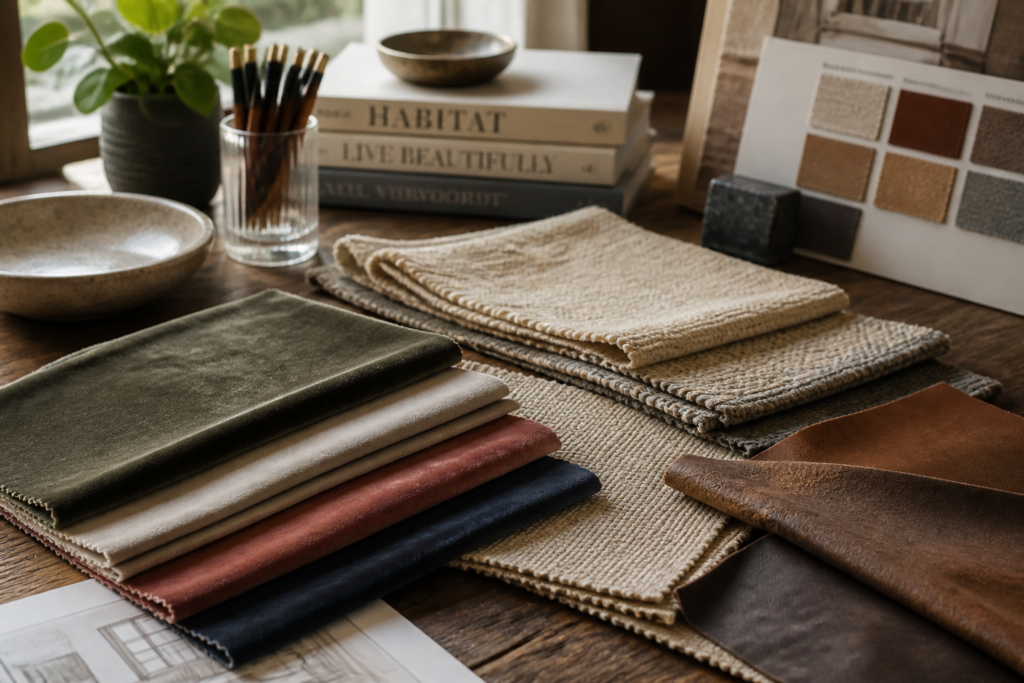
The industry standard for measuring fabric durability is the Martindale rub test. For a durable sofa in a family home, don’t go below 25,000 rubs. For heavy use or pets, aim for 50,000 or higher.
Performance fabrics (Crypton, Sunbrella, solution-dyed acrylic) are the practical choice for most households. They resist stains, fade, and wear. They’re not always the most beautiful option, but they’re the most forgiving.
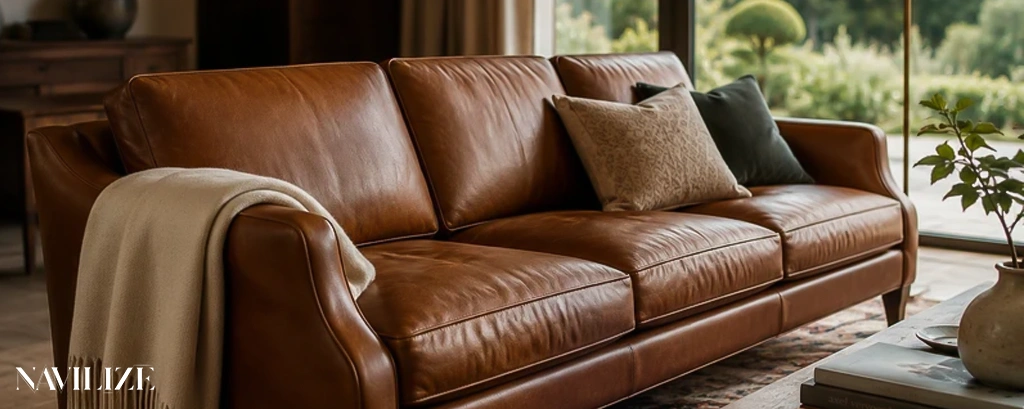
Full-grain leather is the long-game choice. It costs more upfront, but it develops a patina over time and genuinely gets better with age. Bonded leather — which is leather scraps pressed together — does the opposite. It peels within a few years and looks terrible doing it.
Linen and natural weaves are beautiful in low-traffic rooms. Guest rooms, formal sitting rooms, homes without children or pets. In a daily-use family room, they’ll show wear faster than you’d like.
Velvet gets a bad reputation, but performance velvet is actually one of the more forgiving choices I recommend for families. The key word is “performance” — standard velvet crushes and marks easily.
Questions to Ask Before Buying a Sofa
Most salespeople won’t volunteer this information. You have to ask directly. A retailer who can answer these questions confidently is one worth buying from.
On the frame:
- What species of wood is the frame? Is it kiln-dried?
- How are the joints constructed — glued, screwed, doweled, or a combination?
On the cushions:
- What is the foam density in the seat cushions? Can I see the spec sheet?
- Are the cushions reversible?
- What’s the fill — foam only, foam with down wrap, or pocket springs?
On the fabric:
- What is the Martindale rub count?
- Is the fabric treated for stain resistance?
- Can I order a swatch before committing?
On the warranty:
- What does the warranty cover — frame only, or cushions and fabric too?
- How long is the frame warranty?
A 10-year frame warranty is a good sign. A one-year warranty on everything is not.
Signs of a Poor-Quality Sofa
A client once showed me a sofa she’d bought six months earlier. The legs were already loose. When I flipped it over, I saw they were each attached with a single staple. That’s not a defect — that’s a design choice made to cut costs by about $40 per unit.
Structural red flags:
- Creaking or wobbling when you sit down
- Legs that are stapled rather than bolted to the frame
- Very light weight for the size — indicates hollow or thin framing
- No information available about frame material when you ask
Cushion red flags:
- Extremely soft feel in the showroom
- No density or fill information available
- Non-removable cushion covers
Fabric red flags:
- No Martindale rub count available
- Fabric feels thin or loosely woven when you handle it
- Pilling already visible on the floor model
Retailer red flags:
- Vague language like “premium construction” or “solid materials” without specifics
- No warranty, or a warranty under one year
- Salesperson can’t answer basic questions about foam density or frame joinery
A retailer who stands behind their product will always be able to answer your questions. If they can’t — or won’t — that’s your answer. At Navilize, every sofa in the collection is selected with these standards in mind, so you’re not starting the conversation from scratch.
FAQ
How long should a good sofa last?
A well-built sofa with a kiln-dried hardwood frame and high-density foam should last 15–20 years with normal use. Budget sofas with softwood frames or low-density foam typically show wear within 3–5 years.
What is the best sofa frame material?
Kiln-dried hardwood — oak, ash, or beech — is the gold standard. It resists warping and holds joints firmly over time. Avoid sofas that only say “solid wood” without specifying the species.
How do I know if a sofa cushion is good quality?
Look for HR (high-resilience) foam with a density of at least 1.8 lb/ft³, ideally wrapped in down or feather. Sit on it, stand up, and check if it bounces back within a few seconds. If it stays compressed, the foam is too soft.
What sofa fabric is most durable for families with kids or pets?
Performance fabrics like Crypton or solution-dyed acrylic (e.g., Sunbrella) are the most durable — rated 50,000+ Martindale rubs and resistant to stains and moisture. Avoid loosely woven linens or standard velvet for heavy-use areas.
Is a more expensive sofa always better quality?
Not necessarily. Price reflects brand, design, and retail markup as much as construction quality. A 1,200 sofa with a solid hardwood frame and HR foam can outlast a 4,000 sofa with a poor frame hidden under beautiful upholstery.
What warranty should a quality sofa have?
A reputable manufacturer should offer at least a 10-year warranty on the frame. A one-year warranty on everything — including the frame — is a red flag.