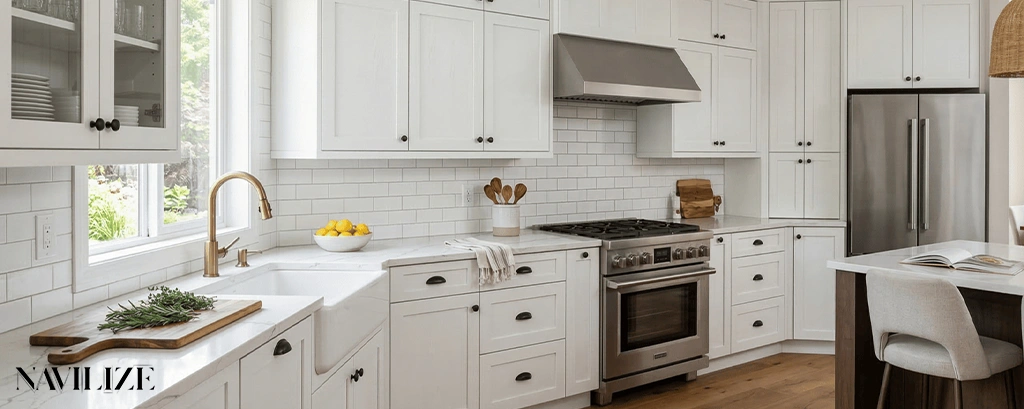
There’s a moment in almost every kitchen renovation when a client points to a slab of Calacatta marble and says, “I want that.” And honestly? I get it. I’ve been working in interior design for over a decade, and marble still stops me in my tracks.
But here’s what I tell every single one of those clients before they sign anything: marble is a commitment. Not a bad one — but a real one. The question isn’t whether marble is beautiful. It obviously is. The question is whether it fits your life.
Let me walk you through everything I’ve learned — the good, the frustrating, and the stuff showroom salespeople conveniently forget to mention.
Why Marble Countertops Are Still Popular
Marble has been used in kitchens and bathrooms for centuries, and it hasn’t lost its appeal for a simple reason: nothing else looks quite like it. The veining is natural, which means your countertop is genuinely one of a kind. No two slabs are identical.
Beyond aesthetics, marble stays cool to the touch — a real advantage if you bake. Pastry chefs have used marble slabs for rolling dough for generations, and that same quality translates beautifully to a kitchen island.
There’s also the resale angle. In high-end real estate markets, marble countertops are still considered a premium feature. Buyers notice them. That perception of luxury has staying power. But popularity and practicality aren’t always the same thing. Which brings us to the honest part.
Pros of Marble Countertops
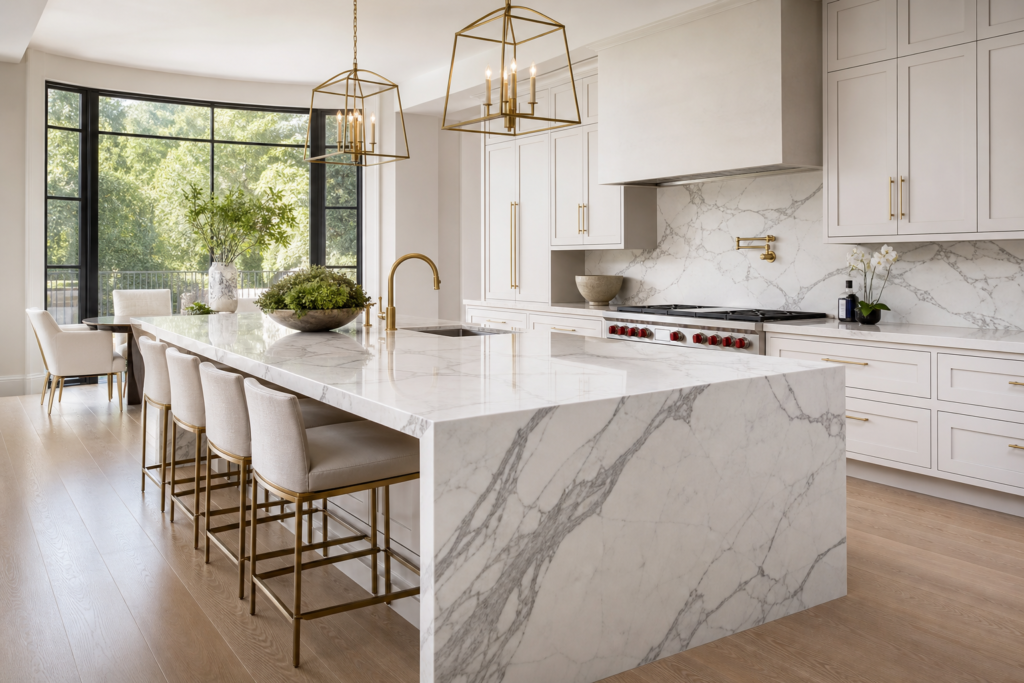
The look is unmatched. Engineered surfaces have gotten remarkably good, but they still can’t fully replicate the depth and movement of natural marble. If visual impact matters to you, marble delivers in a way nothing else does.
It’s heat-resistant. You can set a hot pan directly on marble without damaging the surface — something you absolutely cannot do with quartz or laminate. That said, I’d still recommend trivets out of habit.
It adds long-term value. In premium homes, marble is expected. It signals quality in a way that resonates with buyers and appraisers alike.
Each slab is unique. The variation in veining means your kitchen won’t look like a showroom floor. That individuality is part of what people are paying for.
It’s a natural material. For clients who care about using natural stone rather than engineered products, marble checks that box completely.
Cons You Should Know Before Buying
This is the section I wish more designers led with.
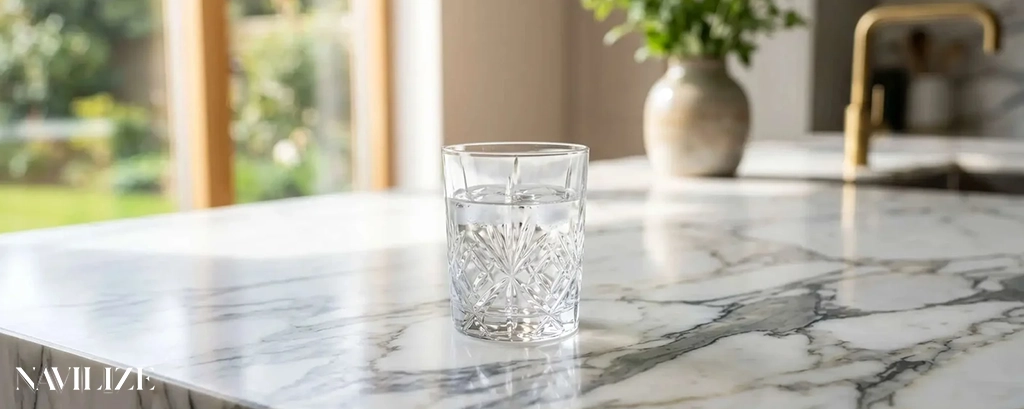
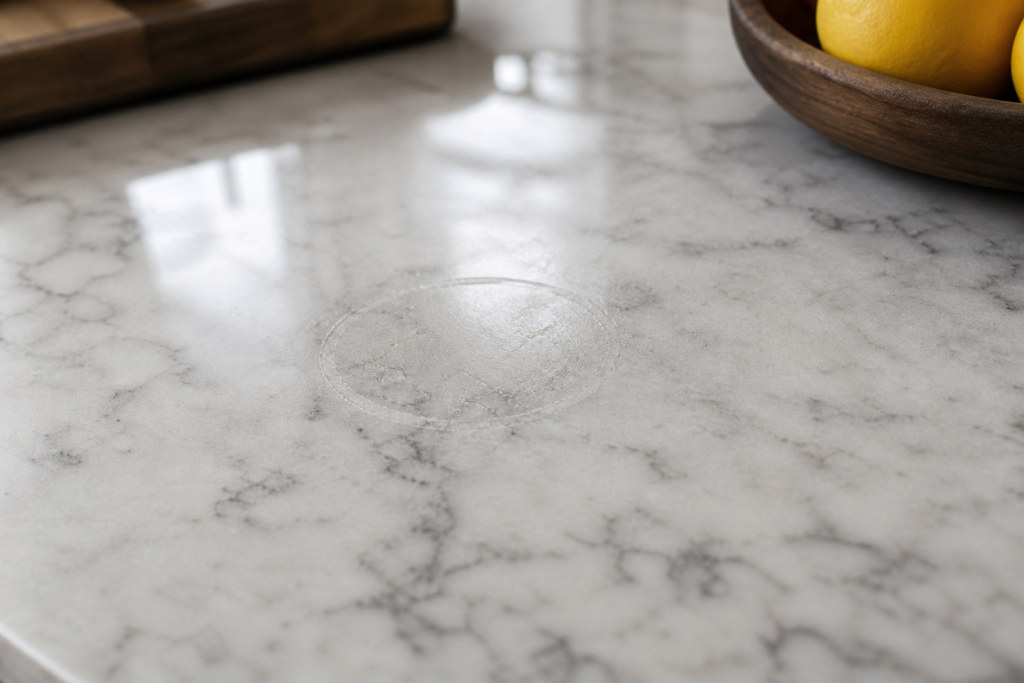
Marble etches. This is the big one. Etching isn’t a stain — it’s a chemical reaction. When acidic substances (lemon juice, wine, tomato sauce, even some cleaning products) contact the surface, they dull the finish. You’ll see it as a lighter, matte patch on polished marble. It doesn’t wash off. It requires professional re-polishing or you learn to live with it.
I had a client who installed Carrara marble in her kitchen. Within three months, she had a permanent ring near the coffee maker from a lemon slice. She loved the marble anyway and accepted the patina. Her neighbor, the same countertop, same situation — hated it. Know which person you are before you commit. It scratches. Marble is softer than granite or quartz. Knives, keys, and abrasive cleaners will leave marks over time.
It requires sealing. Marble is porous, which means it absorbs liquids if left unsealed. You’ll need to seal it at installation and re-seal it every 6–12 months depending on use. It’s not complicated, but it’s a recurring task.
The cost is real. Marble countertops typically run 75–75–250 per square foot installed, depending on the variety and your location. Rarer marbles like Statuario or Calacatta Gold push well past that range.
It’s not forgiving in high-traffic kitchens. If you cook daily, have young kids, or tend to leave things on the counter, marble will show it. That’s not necessarily a deal breaker — some people love the lived-in look — but it’s not for everyone.
Marble vs Quartz vs Quartzite
This comparison comes up in almost every consultation I do, so let me be direct about it.
Marble is natural stone — calcium carbonate, formed over millions of years. It’s porous, reactive to acid, and requires maintenance. The payoff is unparalleled beauty and a genuine connection to natural material.
Quartz (engineered stone, like Silestone or Caesarstone) is roughly 90–95% crushed quartz bound with resin. It’s non-porous, doesn’t need sealing, resists staining well, and is highly consistent in appearance. It’s also not heat-resistant — the resin can discolor or crack under high heat. If you want low-maintenance and a clean, modern look, quartz is genuinely excellent.
Quartzite is where people get confused. It’s a natural stone (metamorphic, formed from sandstone) that’s often mistaken for marble because of its appearance. It’s significantly harder than marble, more resistant to etching, and still has that natural stone character. If you love the look of marble but want something tougher, quartzite is worth a serious look. Just verify with your supplier — some stones sold as “quartzite” are actually softer dolomitic marble.
Quick comparison:
| Marble | Quartz | Quartzite | |
|---|---|---|---|
| Heat resistance | High | Low | High |
| Scratch resistance | Low | High | High |
| Stain/etch resistance | Low | High | Medium |
| Maintenance | High | Low | Medium |
| Natural stone | Yes | No | Yes |
| Cost (installed) | 75 – 250/sqft | 60 – 150/sqft | 80 – 200/sqft |
Who Should (and Shouldn’t) Choose Marble?
After years of helping clients through this decision, I’ve noticed a pattern.
Marble tends to work well for people who:
- Use their kitchen for light to moderate cooking
- Appreciate patina and the idea that a surface tells a story over time
- Are willing to seal and maintain the stone regularly
- Have a bathroom or butler’s pantry application where acid exposure is minimal
- Are renovating a high-end home where marble is expected
Marble is probably not the right choice if you:
- Cook heavily every day with acidic ingredients
- Have young children who will inevitably spill juice and leave it
- Want a surface you never have to think about
- Are on a tight budget and can’t absorb the cost of professional re-polishing if needed
One thing I always say: marble in a bathroom is almost always a better fit than marble in a kitchen. The acid exposure is lower, the traffic is lighter, and the visual impact is just as strong. If you’re torn, consider marble for the bathroom and a more durable surface for the kitchen.
For clients who want help thinking through the full picture — materials, layout, long-term livability — our interior design services at Navilize are built around exactly these kinds of decisions.
Maintenance Tips for Marble Countertops
If you’ve decided marble is right for you, here’s how to keep it looking its best.
Seal it properly and on schedule. Use a penetrating stone sealer (not a topical coating) at installation. Test annually by dropping water on the surface — if it beads, you’re fine; if it absorbs, reseal. Most kitchens need resealing every 6–12 months.
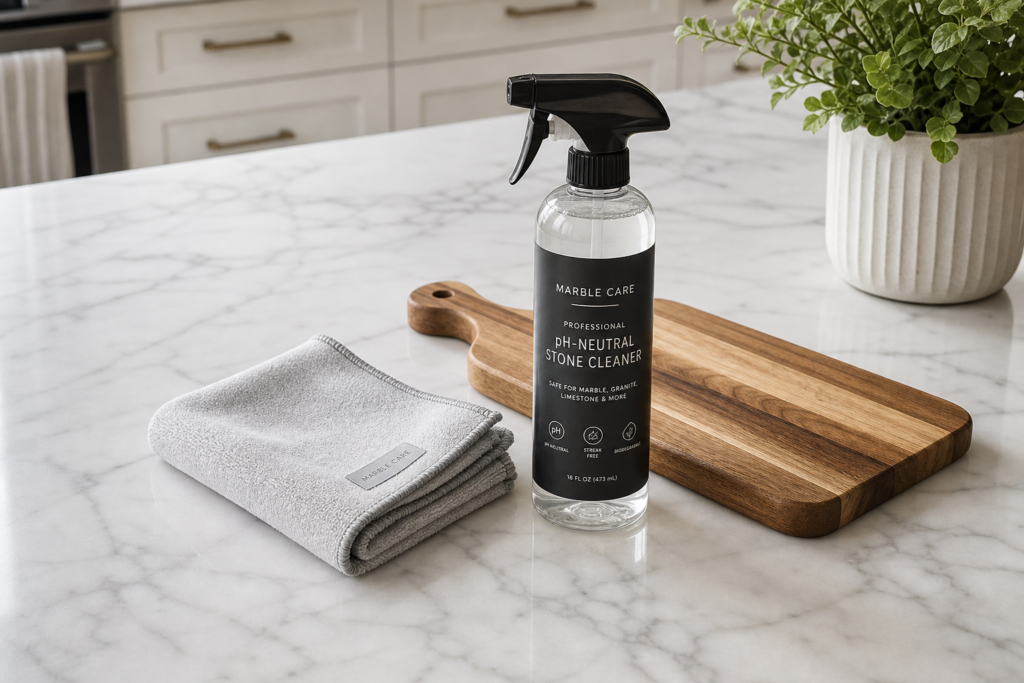
Clean with pH-neutral products only. This is non-negotiable. Vinegar, bleach, lemon-based cleaners, and most bathroom tile cleaners are acidic or alkaline enough to etch marble. Use a cleaner specifically formulated for natural stone, or just warm water and a soft cloth.
Wipe spills immediately. Especially anything acidic — citrus, wine, coffee, tomato. The longer it sits, the more likely it is to etch or stain. Use cutting boards and trivets. Marble can handle heat, but knives will scratch it. Protect the surface from unnecessary wear.
Accept the patina — or budget for polishing. Over time, even well-maintained marble develops a patina. Some people love this; it gives the stone character. If you want to restore the original polish, a stone restoration professional can re-hone and re-polish the surface. Budget roughly 200–200–500 for a standard kitchen, depending on condition and size.
Avoid abrasive scrubbers. Steel wool, rough sponges, and powdered cleansers will scratch the surface. Soft cloths and non-abrasive sponges only.
FAQ
Are marble countertops worth the investment?
For the right person, yes. If you value natural beauty, are willing to maintain the surface, and understand that marble develops character over time, it’s a worthwhile investment — especially in bathrooms or lower-traffic kitchens. For high-use family kitchens, the maintenance demands may outweigh the aesthetic benefits.
How long do marble countertops last?
Properly maintained marble countertops can last decades — even a lifetime. The stone itself doesn’t degrade. What changes is the surface finish: etching, scratching, and staining accumulate over time. With regular sealing and careful use, marble holds up remarkably well.
What’s the difference between marble and quartzite?
Marble is calcium carbonate and reacts to acid, causing etching. Quartzite is a harder natural stone that’s more resistant to etching and scratching. They can look similar, but quartzite is significantly more durable for kitchen use.
How often does marble need to be sealed?
Most kitchen marble needs sealing every 6–12 months. Bathroom marble, with lower acid exposure, may only need it once a year or less. The water bead test is the easiest way to check: if water absorbs rather than beads, it’s time to reseal.
Can marble countertops be repaired if they etch or stain?
Yes. Light etching can sometimes be addressed with marble polishing powder. Deeper etching and scratches require professional re-honing. Stains that have penetrated the stone can often be drawn out with a poultice. None of these are quick fixes, but they’re not permanent damage either.
Is marble more expensive than quartz?
Generally yes, though there’s overlap. Entry-level marble and mid-range quartz can be similarly priced. At the high end, rare marble varieties significantly outprice quartz. Factor in ongoing maintenance costs for marble — sealing, occasional professional polishing — when comparing total cost of ownership.