Biophilic design isn’t a trend — it’s a design approach rooted in how humans evolved. Our brains are wired to respond to natural elements: daylight, greenery, water, organic textures. When those elements are missing from our indoor environments, we feel it — even if we can’t always name why.
The term “biophilia” was popularized by biologist E.O. Wilson in 1984 to describe humanity’s innate affinity for living systems. In interior design, biophilic principles translate that connection into tangible choices: window placement, material selection, spatial flow, and how light and air move through a room.
What Is Biophilic Design?
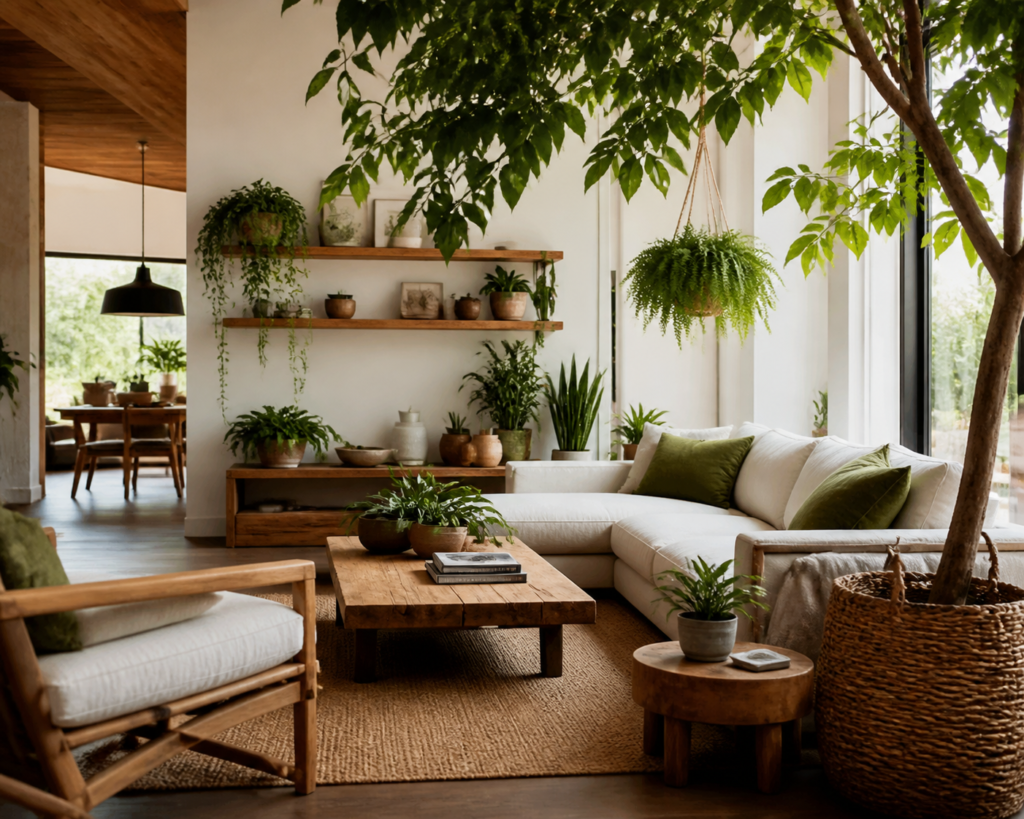
Biophilic design integrates natural elements into built environments to improve occupant well-being. It’s not just about adding houseplants — though plants are one tool. The framework includes:
Direct nature contact:
- Living greenery (potted plants, living walls, interior courtyards)
- Natural light (maximized daylight, views to the outdoors)
- Water features (fountains, aquariums, rain gardens visible from interior spaces)
Indirect nature references:
- Natural materials (wood, stone, clay, linen)
- Organic shapes and textures (curved lines, irregularity, tactile surfaces)
- Nature-inspired color palettes (earth tones, greens, blues)
Spatial qualities:
- Prospect and refuge (open views balanced with sheltered nooks)
- Connection to natural cycles (daylight variation, seasonal changes)
- Airflow and ventilation that mimic outdoor conditions
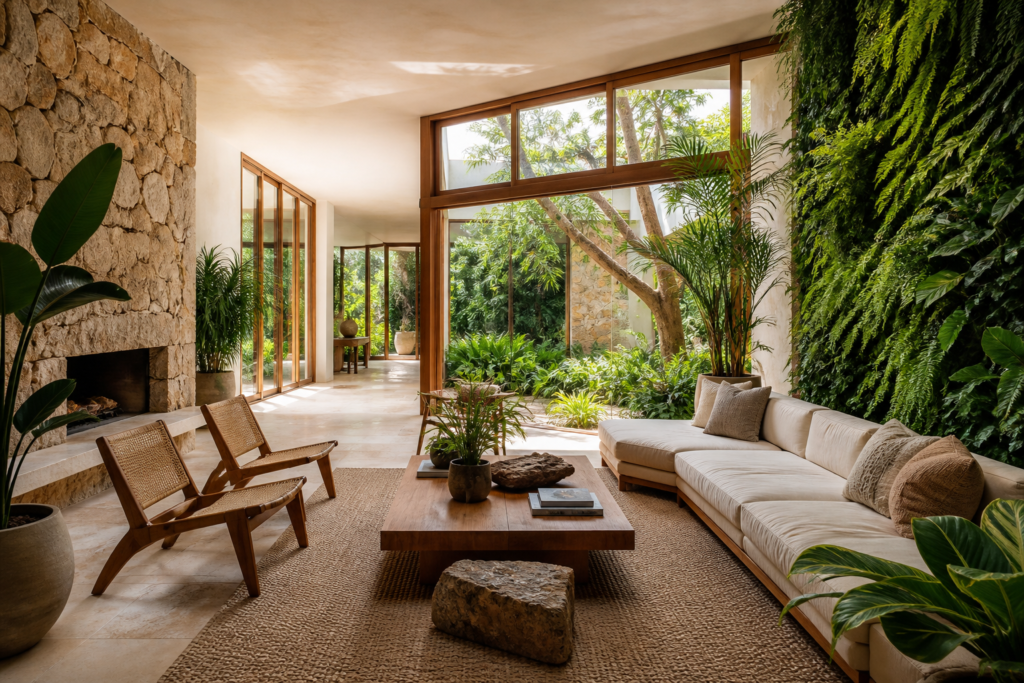
One project I worked on involved a client who felt anxious in their own home despite it being newly renovated. The space was clean, modern, and well-lit with recessed LEDs — but completely sealed from exterior light and furnished almost entirely with synthetic materials. We replaced two solid walls with floor-to-ceiling glass to borrow light from an adjacent courtyard, swapped laminate for oak flooring, and introduced a vertical garden on the main sightline from the entry. The shift wasn’t just aesthetic — the client reported measurably better mood and sleep within weeks.
The Science Behind Biophilic Design
The research backing biophilic design spans environmental psychology, neuroscience, and public health. Key findings include:
Stress reduction:
A 2015 study published in the Journal of Physiological Anthropology found that interaction with indoor plants reduced physiological and psychological stress. Participants showed lower blood pressure and subjective anxiety after a brief plant-care task compared to a computer-based task.
Cognitive performance:
Research from the University of Melbourne (2014) demonstrated that a 40-second “micro-break” to view a green roof improved focus and reduced errors on a sustained-attention task compared to viewing a concrete rooftop. The mechanism: natural scenes allow the prefrontal cortex to rest, restoring directed attention capacity.
Recovery and healing:
The landmark 1984 study by Roger Ulrich in Science found that hospital patients recovering from gallbladder surgery who had a window view of trees required less pain medication and were discharged sooner than those facing a brick wall. This finding has been replicated across multiple healthcare settings.
Air quality and respiratory health:
A NASA Clean Air Study identified specific houseplants (such as spider plants, snake plants, and pothos) that remove volatile organic compounds (VOCs) like formaldehyde and benzene from indoor air. While the effect is modest in typical home conditions, the cumulative benefit in poorly ventilated spaces is measurable.
Circadian regulation:
Exposure to natural daylight — particularly morning light — synchronizes circadian rhythms more effectively than artificial light at any color temperature. A 2017 study in Building and Environment showed that office workers with window access slept an average of 46 minutes more per night than those in windowless environments.
Proven Benefits for Mental and Physical Health
The practical outcomes of biophilic design are consistent across residential, workplace, and healthcare environments:
| Benefit | Supporting Evidence |
| Reduced stress and anxiety | Lower cortisol levels, decreased heart rate variability |
| Improved mood and emotional regulation | Increased positive affect scores, reduced symptoms of depression |
| Enhanced focus and productivity | Faster reaction times, fewer errors on attention tasks, improved memory recall |
| Better sleep quality | More consistent circadian rhythms, longer sleep duration |
| Faster recovery from illness | Shorter hospital stays, reduced need for pain medication |
| Lower blood pressure | Measurable drops in systolic and diastolic pressure with plant exposure |
These are not marginal effects. A meta-analysis published in Frontiers in Psychology (2019) found that across 42 studies, exposure to nature — even simulated or indirect — produced effect sizes comparable to common clinical interventions for stress and mood disorders.
From a design perspective, this means that choices traditionally made for aesthetic reasons — material selection, window size, spatial layout — have direct, quantifiable impacts on occupant health.
Easy Ways to Add Biophilic Design to Any Home
You don’t need a complete renovation. Biophilic design scales to any budget and any space.
Start with light:
- Remove heavy window treatments that block daylight. Use sheer fabrics or top-down shades that preserve privacy while letting light in.
- If privacy isn’t a concern, leave south- or east-facing windows uncovered during the day.
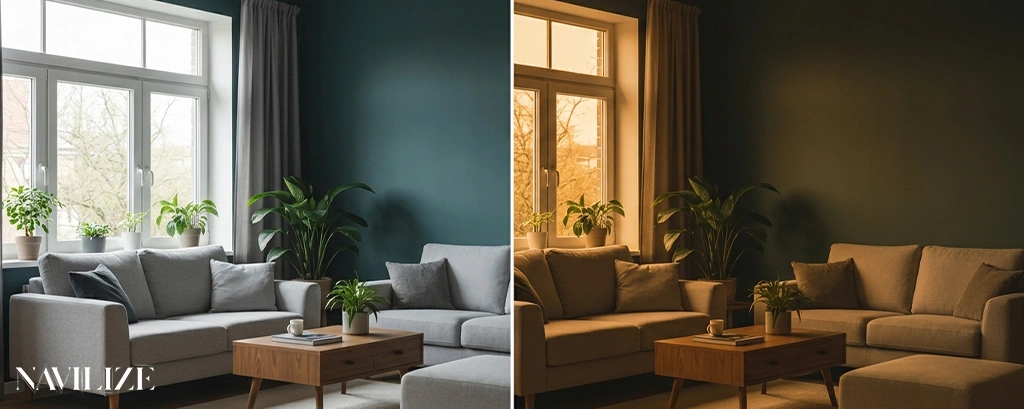
- Replace cool-white LEDs (5000K+) with warm-white or daylight-spectrum bulbs (2700–4000K) to reduce the artificial quality of indoor lighting at night.
Introduce living elements:
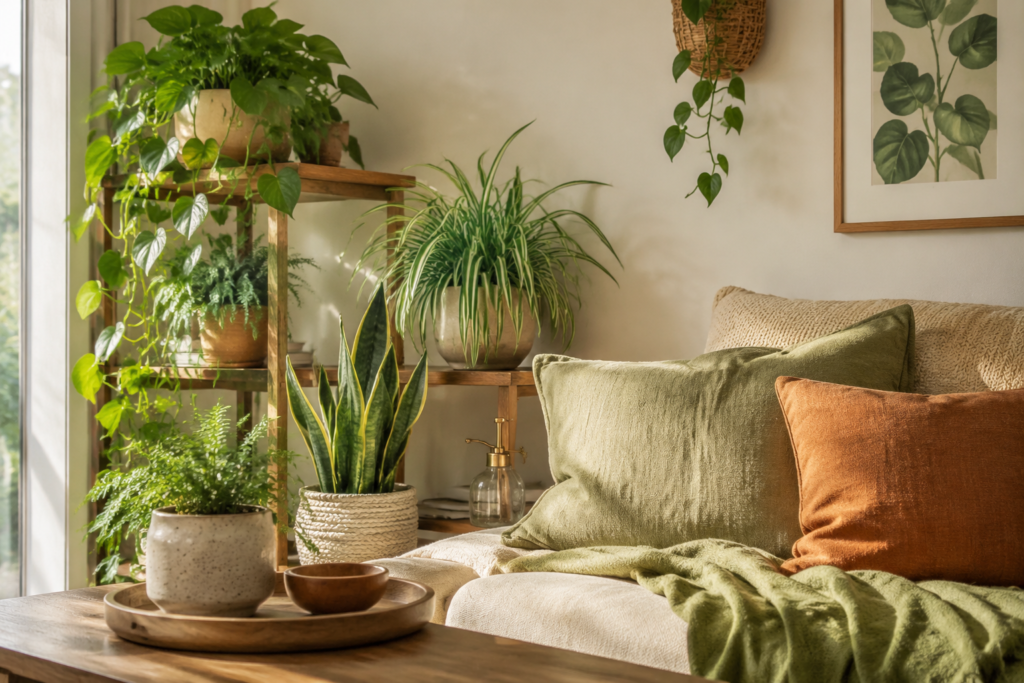
- Choose low-maintenance plants if you’re new to plant care: pothos, snake plant, ZZ plant, or spider plant thrive in low to moderate light and tolerate irregular watering.
- Group plants in clusters rather than scattering single pots — this creates a stronger visual and psychological effect.
- Place plants where you spend the most time: near your desk, beside the sofa, on the kitchen counter.
Use natural materials:
- Swap synthetic textiles (polyester, acrylic) for natural fibers: cotton, linen, wool, jute.
- Add wood elements even in small doses: a cutting board, a wooden tray, a shelf in oak or walnut.
- Choose stone, ceramic, or clay over plastic for planters, bowls, and decorative objects.
Create views and sightlines:
- Arrange furniture so that seating faces a window or an indoor green zone rather than a blank wall.
- If you lack outdoor views, use a large-scale photograph or painting of a natural landscape. Studies show that even nature imagery provides measurable (though smaller) stress-reduction effects compared to abstract or urban scenes.
Add texture and organic shapes:
- Replace flat, hard-edged decor with objects that have irregular surfaces: woven baskets, driftwood, unpolished stone.
- Avoid perfectly symmetrical arrangements — natural environments are asymmetrical, and our brains find that visually restful.
One client lived in a north-facing apartment with limited natural light. We couldn’t change the architecture, but we lined the main living area with pothos vines on floating shelves, swapped all synthetic throw pillows for linen and cotton, and installed a small tabletop water fountain. The ambient sound of running water and the visible greenery created a noticeable shift in how the space felt — less like a sealed box, more like a place where you could breathe.
Common Mistakes to Avoid
Biophilic design is intuitive once you understand the principles, but a few common missteps can undermine the effect:
Over-reliance on fake plants:
Artificial greenery has no measurable impact on air quality, stress reduction, or cognitive performance. If maintenance is a concern, choose one or two real low-maintenance plants rather than filling a space with faux foliage.
Ignoring light quality:
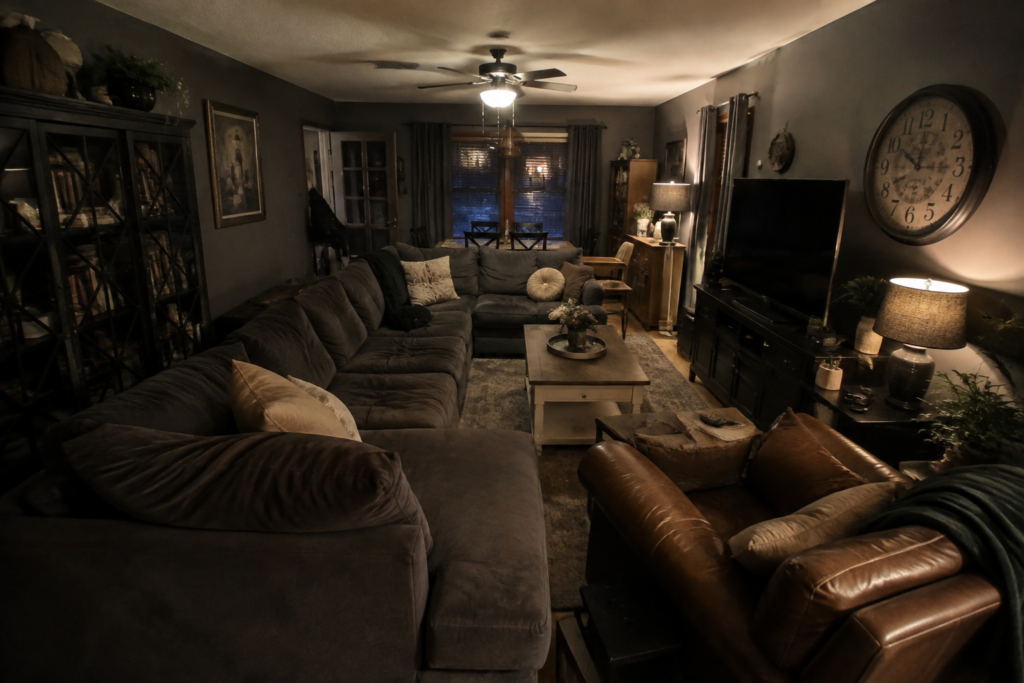
Adding plants to a dim, artificially lit room won’t deliver the full benefit. Daylight is the foundation of biophilic design — prioritize it before adding other elements.
Choosing plants incompatible with your light conditions:
A fiddle-leaf fig in a low-light room will decline quickly, creating visual clutter and a maintenance burden. Match plant species to the actual light levels in your space, not to what looks good in photos.
Biophilic Design Backed by Science: How Nature Improves Your Home and Well-Being
Biophilic design works best when it’s integrated into how you use a space. A single plant on a high shelf you never look at won’t have the same effect as greenery positioned in your daily sightlines.
Overcomplicating it:
You don’t need a living wall or an indoor waterfall. A few well-placed plants, a view to the outdoors, and natural materials in daily-use objects are often enough to shift the psychological tone of a room.
Neglecting maintenance:
Dead or dying plants have the opposite effect of living ones. If you’re not prepared to water and care for plants, focus on maximizing natural light and using organic materials instead.
Frequently Asked Questions
What is biophilic design?
Biophilic design is an approach that integrates natural elements — living plants, natural light, organic materials, water, and nature-inspired patterns — into interior spaces to improve mental and physical well-being.
Does biophilic design actually work?
Yes. Research shows measurable benefits including reduced stress (lower cortisol and blood pressure), improved cognitive performance, better sleep quality, and faster recovery from illness. Effect sizes are comparable to common clinical interventions for stress and mood.
What are easy ways to add biophilic design to my home?
Start by maximizing natural light, adding a few low-maintenance plants (pothos, snake plant, ZZ plant), using natural materials like wood and linen, and arranging furniture to face windows or green zones rather than blank walls.
Do fake plants count as biophilic design?
No. Artificial plants provide no measurable health benefits. If plant care is a concern, choose one or two real low-maintenance species rather than relying on faux greenery.
What plants are best for beginners?
Pothos, snake plant (Sansevieria), ZZ plant, and spider plant are all highly tolerant of low light and irregular watering, making them ideal for low-maintenance biophilic design.
Can biophilic design work in small spaces or apartments?
Absolutely. Even a few potted plants, a view to the outdoors, natural textures, and good daylight access can deliver measurable benefits. Biophilic design scales to any space and budget.